Table of Contents
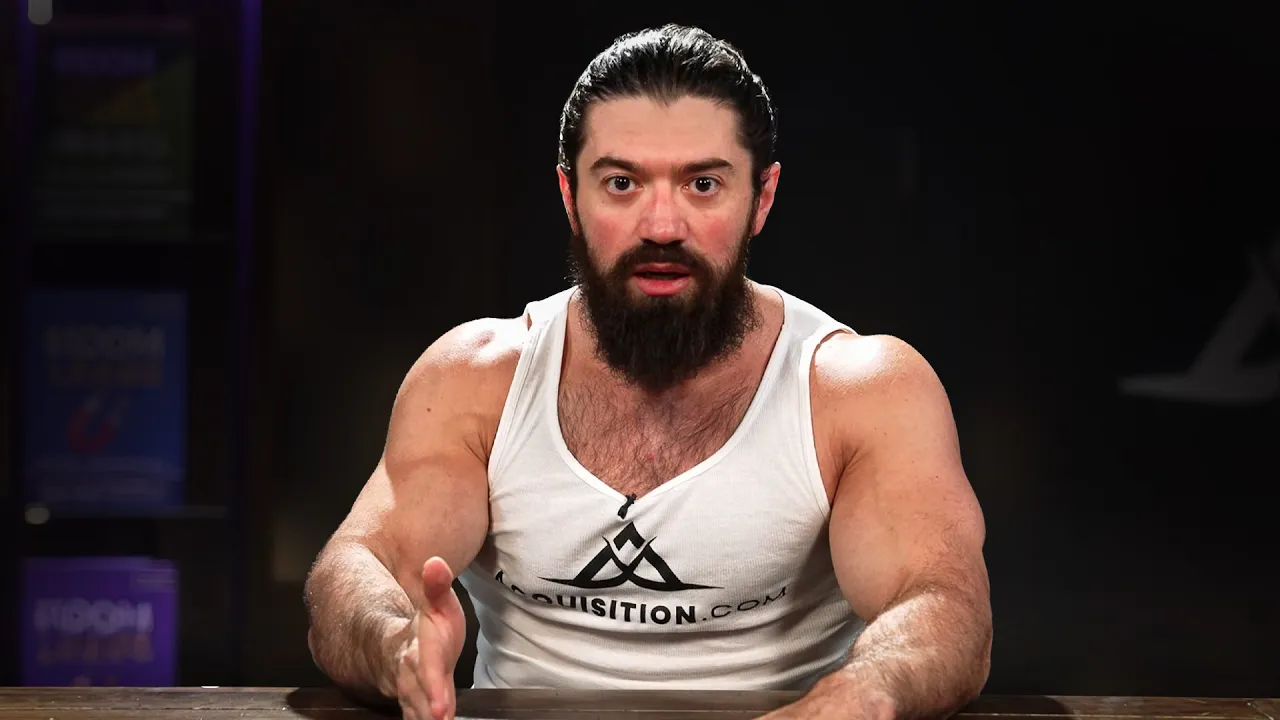
My notes from the Tony Robbins x Alex Hormozi conversation
Who is Tony Robbins?
Tony Robbins is a strategist who's coached US presidents, royal families, and some of the world's top performers—Princess Diana, Andre Agassi, Mike Tyson, and countless others you've never heard of because they prefer to stay private.
He's built over 100 companies doing north of $12 billion a year. He's fed over a billion people through his foundation. And he's spent 45+ years studying what makes people tick—why some thrive while others just survive.
This interview with Alex Hormozi went deep. Not headline-driven algorithm content. Real questions about motivation, fulfillment, and why success doesn't always feel like success.
Here are my biggest takeaways.
The Two Types of Motivation
Tony breaks motivation into two categories:
Push Motivation — Willpower, discipline, duty, obligation. The "I have to do this" energy. It works, but it has a ceiling. You can only push so hard for so long before your arms give out.
Pull Motivation — Something outside yourself that you want to serve. It gets you up early and keeps you up late—not because you have to, but because you can't imagine not doing it.
The key insight: Push motivation is depletable. Pull motivation is renewable.
Most high achievers start with push. They grind, they execute, they hit milestones. But somewhere along the way, the wins stop feeling like wins. That's the ceiling of push motivation.
Your Words Shape Your Reality
Tony told a story about three business partners who got screwed in the same negotiation. Same situation. Three completely different emotional responses:
- One guy: "I'm furious. I'm enraged. I'll kill them."
- Tony: "I'm pissed off. I'm angry."
- Third guy: "I'm a little annoyed."
Why the difference? The words they habitually used.
The calm guy had trained himself never to escalate his language. His belief: "If you get angry, the other guy wins."
Tony calls this Transformation Vocabulary—deliberately swapping high-intensity words for ones that serve you better.
He literally removed the word "depressed" from his vocabulary decades ago. Not because he stopped feeling down, but because the word itself was creating a state he didn't want to live in.
Practical application: Notice your habitual language. "I have to" vs "I get to." "This is exhausting" vs "This is challenging." Small shifts, massive emotional differences.
The Moonshot Effect
Tony fed 42 million people over 37 years through his foundation. But he wasn't emotionally connected to it. Just writing checks.
So he set a new goal: Feed a billion people in 10 years.
That number was unreasonable. It forced him to think differently, strategize differently, be different. And crucially—he didn't just donate. He went into the trenches. He saw faces. He felt impact.
Result? He did it in 8 years. Then set a bigger goal: 100 billion meals.
The lesson: Disconnected contribution feels hollow. Connected contribution feels like everything. The moonshot isn't about scale—it's about emotional association.
The Astronaut Problem
Tony brought up astronauts who walked on the moon. They beat tens of thousands of people. Got shot into space on a rocket built by the cheapest bidder. Walked on the moon. Came back heroes.
Then what?
Most of them became alcoholics. Because they forgot how to find adventure in a smile. They'd done the ultimate thing, and nothing else compared.
The parallel for entrepreneurs: You can hit your moon. Make the money. Build the business. But if you don't learn to stay emotionally connected to the journey, you'll feel empty at the destination.
Analytical vs Anabolic
Tony made Alex name two versions of himself:
Analytical Alex — The brilliant strategist who executes everything but lives in his head. Optimizes joy out of existence.
Anabolic Alex — The guy who laughs, lights up a room, actually enjoys the ride.
We all have both. The question: Which one are you putting in charge?
Most high performers let analytical run the show. It's what got them here. But it's also what keeps them from feeling alive once they arrive.
The Science vs The Art
Tony's framework:
The Science of Achievement — Learnable, repeatable, systematic. If you want to make money, there's a science to it.
The Art of Fulfillment — Unique to every person. There's no formula. You have to find what lights you up.
Most people master the science and neglect the art. They achieve everything and enjoy nothing.
My Favorite Line
"The difference between rich and poor isn't money—it's feeling fully alive versus going through the motions."
The Bottom Line
Success built on push motivation will always hit a wall. The people who sustain it—who actually enjoy the ride—have found something that pulls them forward.
That's not about working less. It's about working from a different place.
Find the moonshot. Change the language. Put the right version of yourself in charge.
Watch the full episode here -