Table of Contents
- The One Insight From James Clear That Changes Everything
- The 5-Minute Window That Determines Your Life
- Bad Days Matter More Than Good Days
- The Identity Shift That Makes Habits Stick
- Your Environment Is Your Destiny
- Habits Have Seasons (And That's Okay)
- Never Miss Twice
- The Input-Output Equation
- Create Conditions For Success
- The Bottom Line
The One Insight From James Clear That Changes Everything
Your brain makes 35,000 decisions a day. Most of them happen without you even noticing.
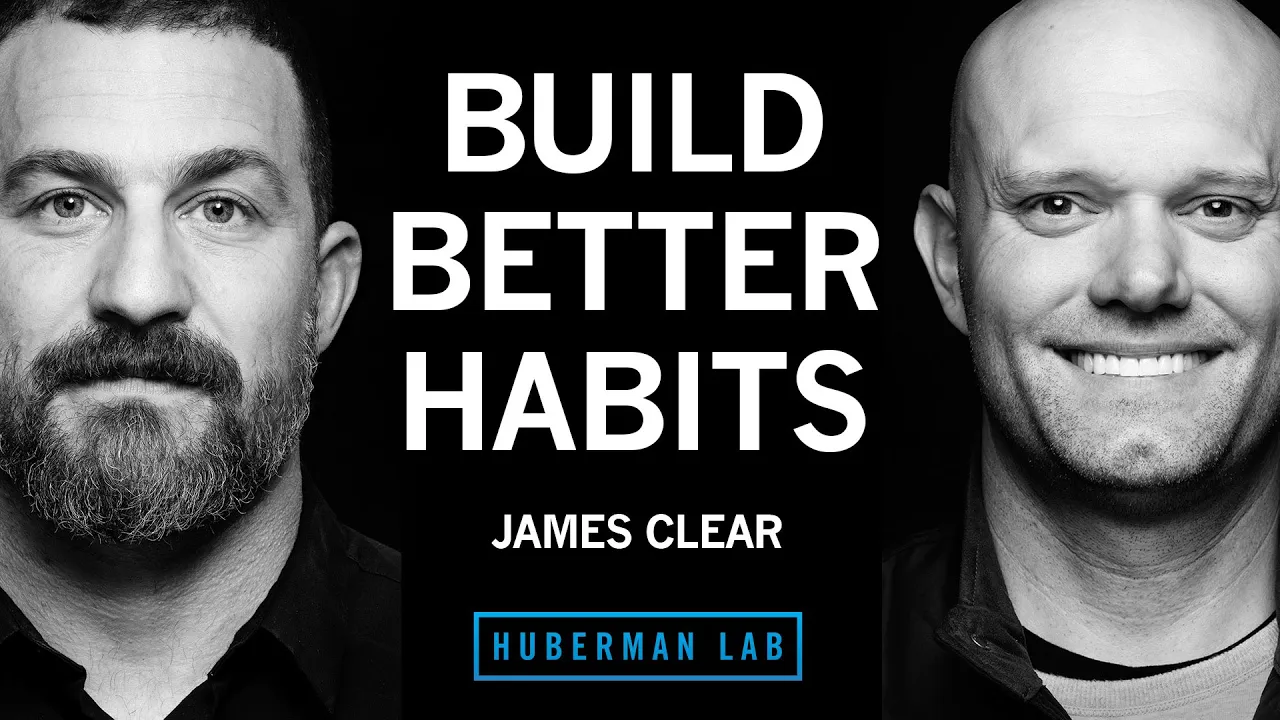
I recently listened to James Clear on Andrew Huberman's podcast, and one idea hit me like a freight train: the heaviest weight at the gym is the front door.
Not the barbell. Not the dumbbells. The door.
And that changes everything about how we should think about habits.
The 5-Minute Window That Determines Your Life
Here's what James shared that stopped me in my tracks.
His trainer told him about a morning class where eight people signed up. It was cold, rainy, and gross outside. Only two showed up.
The workout itself? Exactly the same as every other day. Same exercises. Same duration. Same results.
The difference was a 5-minute window. Are you willing to be uncomfortable for 5 minutes while getting ready and driving there?
Most people aren't.
And that tiny window—that 5-minute stretch of friction—is where habits live or die.
James put it plainly: "The people who make it easy to get started succeed. The people who dream up big ambitious plans set themselves up to fail."
Bad Days Matter More Than Good Days
This one flipped my thinking entirely.
We obsess over optimization. The perfect morning routine. The ideal workout split. The optimal time to meditate.
But James argues the opposite: your bad days count for more than your good days.
Think about it. Everyone works out when they feel great. Everyone writes when inspiration strikes. Everyone eats clean when motivation is high.
The only place you gain an edge is showing up when it's not optimal.
He had a reader named Mitch who made a rule for himself: he wasn't allowed to stay at the gym for longer than 5 minutes. Drive there, do half an exercise, leave.
Sounds ridiculous, right?
But Mitch was mastering the art of showing up. Six weeks in, he thought, "I'm here all the time anyway. Might as well work out longer."
The habit formed. The rest followed.
The Identity Shift That Makes Habits Stick
Here's where James goes deeper than most habit advice.
Most people start with outcomes: "I want to lose 20 pounds."
James suggests starting with identity: "Who do I wish to become?"
Every action you take is a vote for the type of person you want to be.
- Study for 20 minutes? Vote for being studious.
- Go for a run? Vote for being a runner.
- Write one sentence? Vote for being a writer.
One vote doesn't mean much. But stack enough votes over 3 months, 6 months, a year—and you cross an invisible threshold. You start saying, "This is just who I am."
And when something becomes part of your identity, you don't have to motivate yourself. You fight to maintain it.
Your Environment Is Your Destiny
James shared a story about a guy learning guitar. He'd go to lessons, get homework on chords and scales, come home, and put his guitar in the case in the closet.
A week later, his instructor would ask: "Did you practice?"
Nothing.
So he bought a stand and put the guitar in the middle of his living room. Now he passed it 30 times a day. He couldn't help but pick it up.
The lesson? Walk into any space you spend time in and ask: What behaviors are obvious here? What is this space designed to encourage?
Usually, it's encouraging the thing you don't want.
James takes this seriously in his own life. For the last year and a half, he's had no social media on his phone. His assistant has the passwords. He deleted email from his phone too—downloaded it twice in six months.
The friction is just enough to break the reflex.
Habits Have Seasons (And That's Okay)
This was liberating.
James wrote two articles a week for three years. Then he signed a book deal and stopped. Then he wrote a weekly newsletter instead.
Most people would see stopping the twice-weekly articles as failure. James sees it differently: "Habits can have a season."
Your fitness habits will change. Your writing habits will change. Your priorities will shift based on your life circumstances.
The question isn't whether you'll stick to the same habit forever. It's whether you can adapt while staying consistent in a different form.
Consistency is adaptability. Mental toughness isn't grinding through the same routine no matter what—it's finding a way to show up even when the circumstances change.
Never Miss Twice
This is James' simplest and most practical rule.
You're following a diet for eight days. Day nine, you binge a pizza. What now?
Never miss twice.
Get back on track tomorrow.
The real insight: top performers make mistakes like everyone else. They just get back on track faster.
If the recovery is fast, the slip doesn't matter much. You get to the end of the year and it's just a blip. But letting one miss turn into three months of inactivity? That's the real failure.
The Input-Output Equation
Early in his career, James had rapid growth. Then he hit 100,000 subscribers and got in his head about it. He thought: "Let me spend even more time writing."
The writing got worse.
His theory now? He was writing more but reading less. Fewer inputs. Fewer sources of inspiration. Fewer sparks for interesting thoughts.
Almost every thought you have is downstream from what you consume.
When you choose who to follow, what to read, which podcasts to listen to—you're choosing your future thoughts. Those inputs will spark ideas next week, next month.
James structures his days around this. He works out first. Then he reads. And if he's reading something relevant to what he's working on, he can barely stop himself from writing.
The reading fills the tank. The writing empties it. You need both.
Create Conditions For Success
James has worked out consistently for 20 years. But when his third kid was born, he started missing sessions. So he hired a trainer who shows up at his house.
Now he never misses.
The insight isn't about workouts. It's about conditions.
"The problem wasn't me doing the workout. The problem was I needed to create the conditions for a workout to happen."
Ask yourself:
- What conditions would make your desired habit inevitable?
- What friction could you remove to make starting effortless?
- What could you add to your environment to make the right choice obvious?
The Bottom Line
Habits aren't about willpower. They're about systems.
Make it obvious. Make it attractive. Make it easy. Make it satisfying.
And when you miss? Never miss twice.
The heaviest weight really is the front door. Master that 5-minute window, and everything else follows.
What's one habit you've been trying to build? Ask yourself: Am I making it easy to get started, or am I setting myself up to fail?
Watch the full episode here -